Unemployment: day 8
I visited to South Korea. It was my first time to visit there. In this trip, my purposes are eating Chonggukchan and seeing North Korea from DMZ.
Today, I joined a DMZ tour as the second purpose of this trip. We were tour members of four, from the US, Vietnam, the UK, and me. The tour guidance was in English, but the guide used easy English, so I understood around 70% of it. I felt the tour was excellent, because the guide deeply explained about the places with its histories.
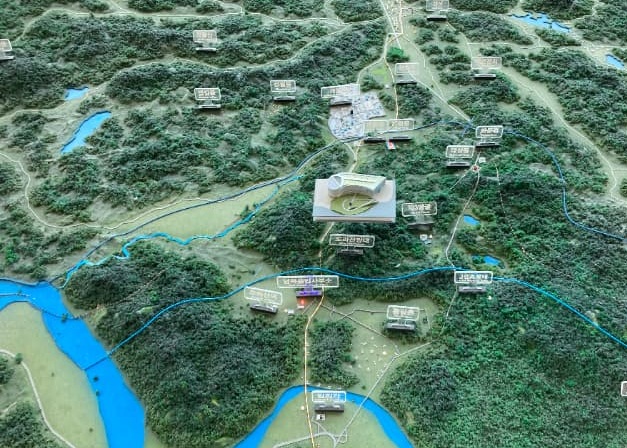
At New Dora Observatory, we can see the edge of North Korea. Although there was a place where we should get nervous, I wondered the visitors enjoyed the views funnily. At The Third Tunnel, I exited to be 170 meters near the border of South and North Korea, I enjoyed the situation than I preferred.
The second day’s timeline was below.
- 04:50 Woke up
- 05:30 Had sundubu for breakfast at Gimgane (Myeongdong Station)
- 07:00 Arrived at the DMZ tour meeting point and departed for Paju City
- 07:50 Reached Imjingak Tourist Information Centre and explored nearby sites (e.g. Bridge of Freedom, Mangbaedan)
- 09:40 Departed for DMZ by tourist bus
- 10:00 Arrived at the Third Tunnel; watched a historical film and explored the tunnel near the North Korean border; bought a fridge magnet to add to my collection
- 11:20 Arrived at Dora Observatory and observed North Korea’s propaganda village
- 12:10 Visited Unification Village for souvenir shopping (but didn’t buy anything)
- 12:40 Returned to Imjingak and had a cheeseburger for lunch
- 13:30 Departed for Seoul
- 14:30 Arrived at Lotte Department Store and started souvenir shopping
- 17:30 Had samgyeopsal and samgyetang for dinner at Daega, Myeongdong
- 18:30 Shopped for souvenirs again for my family
- 19:00 Returned to the hotel and booked a train ticket to Incheon International Airport
References
Correct version
I visited South Korea for the first time. The two main purposes of my trip were to try Cheonggukjang and to see North Korea.
Today, I joined a DMZ tour, which was the second purpose of my trip. There were four of us in the group: from the US, Vietnam, the UK, and myself. The tour was conducted in English. Fortunately, the guide spoke in simple English, so I understood about 70% of the explanations.
I thought the tour was excellent because the guide explained the history of each location in great detail. At the Dora Observatory, we were able to see the edge of North Korea. Although some areas felt a bit tense, I was surprised to see how casually many visitors were enjoying the views.
At the Third Tunnel, I was excited to find myself just 170 metres from the North Korean border. I found the experience more enjoyable than I had expected.
IELTS Improvement Points
Collocation:
“join a tour”
→ Common phrase to describe participating in a guided trip. Better than just “I went a tour”.
“explained in great detail”
→ A formal and natural collocation used in evaluations or reviews. Increases lexical resource.
“observe North Korea’s propaganda village”
→ “Observe” fits better in formal or semi-formal registers than “look at” when describing watching scenery or phenomena.
“return to the hotel” / “book a ticket”
→ These are standard collocations; improve fluency and precision.
“add to my collection”
→ Natural when talking about collecting souvenirs or hobbies.
Template:
“There were X of us in the group: A, B, C, and myself.”
→ A clear and elegant listing template that adds structure.
“I was surprised to see that…”
→ This expression introduces reflection or opinion in a natural IELTS-style sentence.
“I found it more [adjective] than I had expected.”
→ A useful pattern for expressing personal reaction. Works well in IELTS Speaking Part 2 & Writing Task 1.
Vocabulary:
“conducted”
→ A formal alternative to “done” or “held”; e.g. “The tour was conducted in English.”
“tense”
→ More appropriate than “nervous” to describe the atmosphere or situation in the DMZ.
“historical film”
→ Preferable to “movie” in formal contexts, especially when educational or informative.
“souvenir”
→ Use this word instead of “goods” or “stuff”; it’s more precise and widely used in travel writing.
“depart” / “arrive” / “explore”
→ Formal verbs often seen in itinerary descriptions, improving tone and coherence.