

Unemployment: day 7
I visited to South Korea. It was my first time to visit there. In this trip, my purposes are eating Chonggukchan and seeing North korea.
The first purpose, eating Chonggukchan, is inspired by a book written about Natto. As I was noticed by the book that there was a food like Natto in South Korea, I became to want to eat the food. Because I really like Natto.
The second purpose, seeing North Korea, is also inspired by the book. This book described about a DMZ tour. DMZ (Demilitarized Zone) is a area 2 kilometers width both side of the border between South and North Korea. We can see a edge of North Korea landscape from a observation building at the other side of South Korea in DMZ. As It is difficult to visit North Korea, but we can see it at the place safely.
Therefore, today was the first day in this trip. The timeline was below.
- 06:35 Left home, but returned to pick up my glasses
- 06:45 Caught a bus
- 07:00 Arrived at Shinjuku Station and rushed
- 07:05 Boarded the train. My seat was at the front carriage, so I had to run across the entire platform
- 07:07 Train departed
- 08:35 Arrived at Narita Airport Station
- 09:00 Checked in at Counter E – there were about 20 people in the queue and it took 20 minutes
- 09:10 Cleared baggage and passport control – hardly any queue
- 09:30 Entered NOA Lounge and had a late breakfast (croquette sandwich, scrambled egg, mitarashi dango, fruit bowl)
- 13:45 Landed at Incheon Airport
- 14:10 Passed immigration – entry card required, customs declaration not needed
- 14:25 Arrived at B1 train station and changed my ticket at the counter to an earlier train (15:20 → 14:40)
- 14:40 Departed the station
- 15:30 Arrived at Seoul Station
- 15:50 Exchanged currency at Moneybox Seoul Station – rate: ₩93,100 per ¥10,000 (rate at Myeongdong: ₩94,100)
- 16:00 Bought T-money card (₩4,000) at Storyway and topped up ₩10,000
- 16:10 Took Metro Line 4 to Myeongdong
- 16:20 Checked in at OYO Myeongdong 6 Hostel
- 16:30 Went for a walk (Namdaemun Market → Sungnyemun Gate → Gwanghwamun Gate → Anjib near Anguk Station)
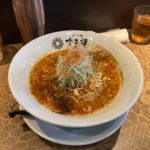
- 18:00 Had a Cheonggukjang set meal at Anjib
- 18:40 Walked around again (Donhwamun Gate → Tom N Toms Coffee → Myeongdong Cathedral → Myeongdong)
- 20:00 Returned to the hotel
References
- The book which causes this trip
- What is about Chonggukchan by Wikipedia
- What is about DMZ by Wikipedia
Correct version
I visited South Korea for the first time. The two main purposes of my trip were to try Cheonggukjang and to catch a glimpse of North Korea.
The first purpose, tasting Cheonggukjang, was inspired by a book I had read about Natto. The book mentioned that a similar fermented soybean dish existed in Korea, which made me curious to try it—especially since I love Natto.
The second purpose, seeing North Korea, also came from the same book. It described the DMZ (Demilitarised Zone) tour. The DMZ is a buffer zone, about 2 kilometres wide on each side of the border between North and South Korea. From an observation post on the South Korean side, visitors can safely view a portion of the North Korean landscape. Since it’s difficult to visit North Korea itself, I wanted to take this rare opportunity.
Today was the first day of my trip. Below is a brief timeline of the day:
IELTS Improvement Points
Collocation:
“catch a glimpse of North Korea”
→ Common collocation meaning “to see briefly or partially”; improves descriptive range.
“curious to try”
→ More natural than “became to want to eat”; this collocation fits well with food and new experiences.
“buffer zone” / “observation post”
→ Technical but commonly used in news/political contexts; shows lexical accuracy in formal topics.
“queue / in the queue”
→ “Queue” is preferred in British English over “line” (US); boosts lexical resource in UK writing.
Template:
“The first purpose was 〜, which was inspired by 〜.”
→ Excellent structure to explain cause-effect relationships or motivations in writing.
“Since it is difficult to 〜, I wanted to 〜.”
→ Shows reasoning and justification clearly – a useful argumentative structure for Task 2.
“Below is a brief timeline of the day:”
→ A clear and formal way to introduce bullet or timeline content.
Vocabulary:
“Demilitarised Zone (DMZ)”
→ Knowing and using political/geopolitical terms shows topic range and precision.
“landscape”
→ Correct use for describing the view or scenery (not “scenery of North Korea” which sounds odd in context).
“fermented soybeans” / “similar dish”
→ More natural than “food like Natto”; descriptive precision is important in IELTS Task 1.
“croquette sandwich”, “scrambled egg”, “fruit bowl”
→ Concrete food vocabulary helps in Task 1, Speaking Part 1 (food/travel topics).
“entry card required, customs declaration not needed”
→ Concise and formal expression – good for process descriptions (Task 1 Academic).

Pingback: - DMZ tour -My first time visiting to South Korea: Day 2
Pingback: The cost of my trip to South Korea: Reference for someone
Pingback: My daughter’s Sense of art: A funny little story