Unemployment: day 31
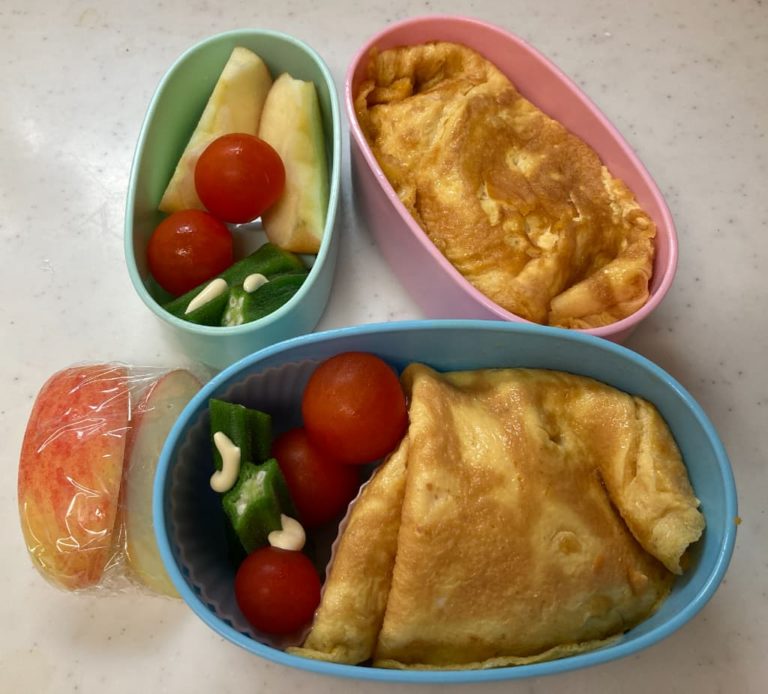
In this morning, I cooked fried rice in omelets for my children’s lunch boxes. From July 19th, my children were on summer vacation. So in week days, my wife or I made their lunch boxes in the morning. It is hard to make different dishes almost everyday. Today I made the fried rice in omelets with frozen fried rice. The fried rice is really tasty, so I often have the dish for lunch at home.
References
Correct version
This morning, I made omelette-wrapped fried rice for my children’s lunch boxes. Since 19th July, my children have been on their summer holidays. So on weekdays, either my wife or I prepare their lunch boxes in the morning. It’s quite hard to come up with different dishes almost every day. Today, I used frozen fried rice to make the omelette dish. It’s really tasty, so I often have it for lunch at home.
IELTS Improvement Points
Collocation:
make lunch boxes / prepare lunch boxes
→ “Make” or “prepare” collocates naturally with “lunch boxes” in this context, meaning to pack food for school or work.
be on summer holidays
→ “Be on holiday” is a standard British collocation. “Summer vacation” is more American; “summer holidays” is more British.
come up with different dishes
→ “Come up with” means to think of or create something. Commonly used for ideas, recipes, or plans.
have [a dish] for lunch
→ “Have” is the typical verb for meals in British English, e.g., “have lunch”, “have pasta”, etc.
Template:
“Since [date], [subject] has been…”
→ Present perfect continuous tense used to describe an action that started in the past and continues to the present. Useful in both Writing Task 1 (trends) and Task 2 (experiences).
“Either [person] or [person] [verb]…”
→ A clear structure to explain shared responsibilities or alternatives. Useful for explaining family roles or routines.
“It’s quite hard to…”
→ A natural way to express a mild difficulty or challenge. Useful in both speaking and writing.
Vocabulary:
omelette-wrapped fried rice
→ A clearer and more natural expression than “fried rice in omelets”. In British English, compound descriptions like this are commonly used.
weekdays
→ Plural noun meaning Monday to Friday. Use “on weekdays” (not “in week days”).
prepare
→ More formal and appropriate than just “make” in writing. Shows a slightly higher register, good for IELTS Writing.
tasty
→ Informal but natural way to say “delicious”. Common in spoken English and informal writing.